

In a phone interview with Fox News, Trump said the United States would become the "guardian" of the strait and should be paid for ensuring maritime security.
"We're going to keep the strait, and we'll probably run it. We'll become the guardian of the strait. Maybe we'll call it the guardian angel of the strait. And we should be reimbursed for that," Trump said.
Trump's remarks came as Washington and Tehran exchanged competing claims over control of the Strait of Hormuz following renewed military confrontations in the Gulf region. Iran has asserted that it holds authority over the waterway, while the United States has maintained that commercial shipping remains open under international navigation rights.
The Strait of Hormuz connects the Persian Gulf with the Gulf of Oman and the Arabian Sea. Approximately one-fifth of the world's oil and liquefied natural gas supplies pass through the narrow maritime passage, making it one of the most strategically significant shipping routes globally. Any disruption to movement through the strait can impact international energy markets and push oil prices higher.
Iran Rejects US Role in Strait of Hormuz
Iran immediately rejected Trump's statement regarding American control over the Strait of Hormuz. The country's top joint military command warned that it would not permit the United States to interfere in the management of the strategic waterway.
The Iranian military stated that any attempt by US forces to pass through the strait without Iranian authorisation would be "strongly confronted." It also warned regional countries that cooperation with Washington would be considered an act of war against Iran.
Iran further stated that if the conflict expands, it would spread across the region, adding that responsibility would lie with the United States and its allies.
Trump Accuses Iran of Changing Negotiation Positions
During the interview, Trump accused Iran of repeatedly changing its position during negotiations and claimed that previous US administrations allowed Tehran to increase its influence.
"Yesterday, they had an 11-hour meeting....They can't settle on one sentence in one minute," Trump said.
"Everything was agreed to yesterday and then they leave the room and call back and say, 'We had to make a couple of changes.' Changes? We're not going to make changes. They're professional negotiators. That's all they are," he added.
Trump criticised former US Presidents Barack Obama, George W. Bush and Bill Clinton, accusing them of failing to take stronger action against Iran. He again targeted the 2015 Iran nuclear agreement, officially known as the Joint Comprehensive Plan of Action, claiming that the deal strengthened Tehran instead of limiting its nuclear ambitions.
"They've been tapping people along for 47 years. Every president got tapped along. They didn't do anything and Iran became more and more powerful. This should have been done 47 years ago," Trump said.
"I held them down. I stopped them. I terminated the Iran nuclear deal. That agreement is one of the worst agreements ever signed by this country," he added.
Trump Defends Soleimani Strike
Trump also defended the 2020 US drone strike that killed Iranian military commander Qassem Soleimani, describing him as a highly capable but dangerous military figure.
"Had I not killed Khomeini, who was a brilliant but mad general, he was a crazy. I killed Soleimani. Soleimani was like one of the really, really bad people in this whole thing. But he was good at what he did. He was a very brilliant general," Trump said.
He further claimed that recent US military action prevented Iran from obtaining nuclear weapons.
"I'll tell you, had I not attacked with the B-2 bombers, they would have a nuclear weapon. And right now the Middle East in its current form would not exist," Trump said.
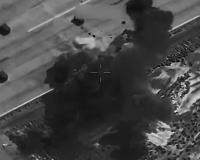
US and Iranian forces exchanged heavy missile and drone attacks over the weekend and into Monday. Tehran claimed that it had targeted US military facilities across the Gulf and maintained that the Strait of Hormuz remained closed, causing global oil prices to rise.
The escalating confrontation over the Strait of Hormuz has intensified concerns over regional security and the stability of global energy supplies, as both Washington and Tehran continue to assert opposing positions over control of one of the world's most important maritime routes.
About The Author








Comment List